Are CEOs Taller? What a Study of a Million Men Found
Share
Picture a boardroom. Long table, expensive chairs, a view of the city. Now picture the person at the head of the table. Chances are, in your head at least, he's tall.
It turns out your imagination has done its research.
The study: over a million men, measured at 18
Sweden used to require almost every young man to go through military conscription testing at around age 18. Everyone was measured the same way: height, cognitive ability and a psychologist's assessment of "non-cognitive" skills such as confidence, persistence and staying calm under pressure.
Decades later, economists Renée Adams, Matti Keloharju and Samuli Knüpfer matched those records against who went on to become a CEO. Their paper, published in the Journal of Financial Economics in 2018, drew on data from more than a million men.
On height, the typical large-company CEO stood about two-thirds of a standard deviation above the average man. In plain terms, that's taller than roughly three out of four men in the population. Or, as our stats card puts it, about 74% of men were shorter than the typical big-company CEO.
So, is the corner office a height requirement?
Not quite, and the researchers were clear about it. Height was one of three traits they looked at, and it wasn't the one that mattered most. What really set CEOs apart from other high-skilled professionals was non-cognitive ability: leadership, social skills, resilience, and the knack of not panicking when the quarterly numbers look terrible.
The median large-company CEO ranked in roughly the top 5% of the population when all three traits were combined. The researchers' own summary is the best line in the paper: traits appear necessary but not sufficient for making it to the top. There were also more than 100 times as many men in management with better trait combinations than the median CEO who never got the top job.
So height doesn't hand you the keys to the building. It seems to help get your name onto the shortlist.
Why would height matter for leadership?
- We're wired to look up to people, literally. Researchers have long suggested that people read height as a signal of strength and authority. That instinct is old, and meetings haven't quite caught up.
- Presence. Taller people tend to be noticed first when they walk into a room, and being noticed is half of being considered.
- Confidence feeds on itself. Being treated like a leader can make it easier to act like one, and acting like one gets noticed.
The fine print
This is one country, one generation, and only men, because that's who was tested at conscription. And being tall is obviously not a leadership skill in its own right. Nobody ever turned a company around by being 6'2" at people.
The lesson is simpler than that. Presence counts, and first impressions count, especially before anyone has seen what you can actually do.
Walk in taller
We can't help with your non-cognitive ability. That part is on you (and perhaps a good night's sleep). But we can help with the first impression.
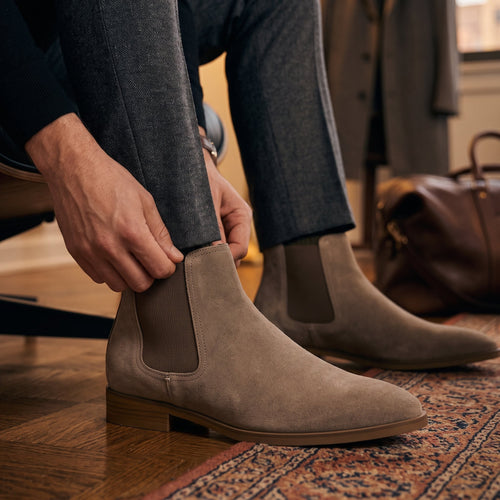
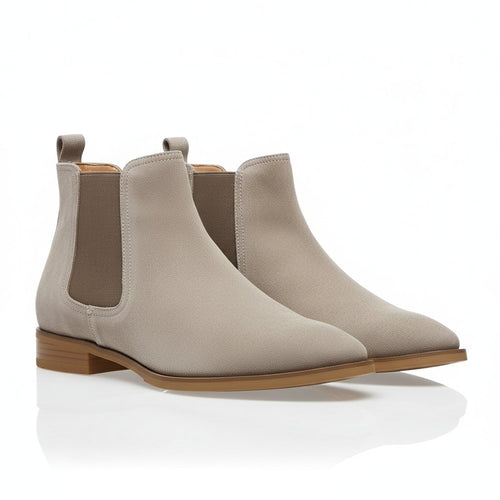
6FT Club dress shoes, boots and sneakers add 2 to 3 inches of height engineered directly into the sole. There's no insert to shift, nothing that looks different from a regular pair, and nothing to give the game away when you cross your legs in the boardroom.
Shop all shoes
Dress shoes for the meeting, boots for the dinner after, and sneakers for the weekend, all with hidden lift and a 30-day fit guarantee.
Sources
- Adams R.B., Keloharju M. & Knüpfer S. (2018). Are CEOs born leaders? Lessons from traits of a million individuals. Journal of Financial Economics, 130(2), 392–408.