
Do Women Only Want Tall Men? Dating, Evolution and the "Bloodline" Myth
Share
Somewhere on TikTok right now, a 5'1" woman is explaining that she only dates men over 6 feet because she needs to "fix her bloodline." The comments are split between people cheering, people laughing, and a lot of shorter men quietly closing the app.
So is it true? Are we all just cavemen with smartphones, and is dating now a game where the tallest few men win and everyone else gets left on read? We looked at the research. The answer is more interesting, and a lot less bleak, than the internet suggests.
The deep past is still in the room
Evolutionary psychologists have argued for decades that some of our dating instincts are leftovers from a very different world. For most of human history, a taller, stronger partner could be a signal of good health, good nutrition and physical protection. Those instincts didn't get the memo about modern life.
They show up clearly in the data. In a 2013 study of 650 university students, researchers led by Gert Stulp found that women strongly preferred a man taller than them. Women in relationships were most satisfied when their partner was about 21 cm (roughly 8 inches) taller. Men, for comparison, were happiest with a partner about 8 cm shorter, and barely cared if she was taller.
So, the "bloodline" thing?
There's a grain of truth in it. The same study found that shorter women preferred a bigger height difference, and taller women were happy with a smaller one. And height is highly heritable, so a taller partner does tend to mean taller kids.
But there's a big leap from "prefers a taller man" to "is running a genetic improvement program." No study we found shows women consciously choosing partners to change their children's height. When researchers actually ask, the reasons are more everyday: feeling protected, feeling feminine, or looking "right" together in photos. A 2026 University of St Andrews study found the strictest height rules were linked to more traditional views about gender roles, not to genetics homework.
And here's the part the TikTok clips leave out. When scientists look at real couples rather than wish lists, the link between partners' heights is surprisingly weak. A 2017 meta-analysis of couples from around the world found a correlation of only about 0.2 to 0.25. In plain English: people lean slightly toward partners of similar height, but short women end up with men of every height, including plenty of short ones. What people say they want and who they fall for are often two different things.
Why it can feel like "winner takes all"
If real couples are so mixed, why does dating feel so brutal for so many men? A lot of it comes down to the apps.
- Everyone aims up. A 2018 study of online dating in four US cities found that most people message prospects who are about 25% more desirable than themselves. Most of those messages go unanswered.
- Endless choice. In a village, you might have had a few dozen options. On an app, you have thousands, and it's easy to keep swiping in case someone "better" is next.
- Height becomes a filter. In person, height is one part of a much bigger picture: your humour, your voice, how you carry yourself. On an app, it's a number. And numbers are easy to filter out with one tap.
The result is a market where a small group of profiles gets a flood of attention and a lot of perfectly decent men get very little. It's not that women have changed. It's that the format rewards snap judgements, and height is one of the snappiest.
Does it actually change who gets married?
A little, yes. Several long-running studies have found that shorter men are somewhat less likely to marry, and tend to marry later. One US study by Abigail Weitzman and Dalton Conley put the reduction at around 18%. That's real, and it's worth being honest about.
But it's a nudge, not a wall. Most shorter men do find partners, and the same research suggests their marriages are, if anything, a bit more stable. Height moves the odds. It doesn't decide the outcome.
And the loneliness epidemic?
This part is serious. Gallup data from 2023 and 2024 found that 25% of American men aged 15 to 35 felt lonely "a lot" of the previous day, compared with 18% of young women and a 15% median across dozens of wealthy countries.
Dating is part of that story, but only part. Researchers point to lost time during COVID, less face-to-face socialising, social media, and the fact that many men find it harder to build close friendships. You may also have seen the claim that 63% of young men are single. That figure comes from one survey, and other large surveys find a smaller gap, so treat it with some caution.
In other words: if you're feeling left out, it's not a verdict on you, and it's not all about the tape measure.
What actually helps
- Get off the apps, at least some of the time. In person, height is one detail among dozens. Clubs, classes, friends of friends and the gym all give people time to see the rest of you.
- Invest in friendships. Men with strong friendships tend to be less lonely, and friends are still the best introduction service ever invented.
- Stand like you mean it. Posture, eye contact and confidence change how tall you come across, often more than the actual number.
- Take the easy wins. Good grooming, clothes that fit and yes, a little extra height if you want it. None of it replaces being good company, but first impressions open doors.
A little lift, if you want it
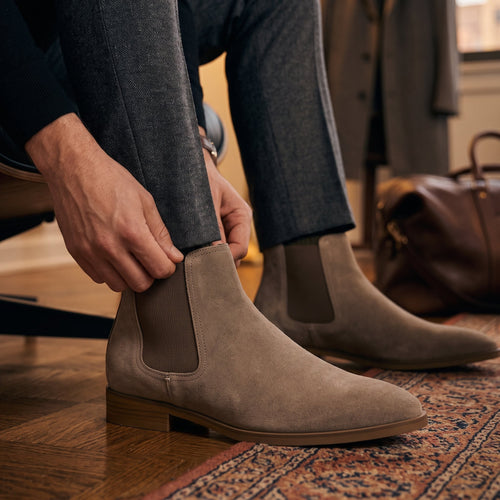
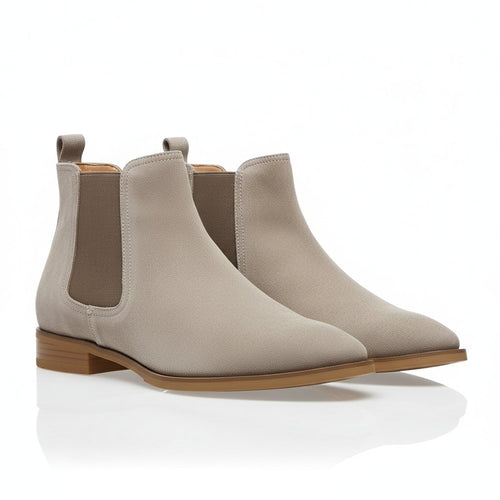
We won't pretend a pair of shoes fixes the dating market. But if you'd like to walk into the first date 2 to 3 inches taller, without anyone knowing why, that's exactly what we make. The lift is built into the sole of every 6FT Club shoe. There's no insert to slip out, and nothing to spot when your shoes come off at her place.
The rest (the jokes, the listening, remembering her dog's name) is still up to you.
Shop all shoes
Sneakers, boots and dress shoes with hidden lift, and a 30-day fit guarantee.
Sources
- Stulp G., Buunk A.P. & Pollet T.V. (2013). Women want taller men more than men want shorter women. Personality and Individual Differences, 54(8), 877–883.
- Stulp G. et al. (2017). Assortative mating for human height: A meta-analysis. American Journal of Human Biology, 29(1).
- Dial A. & Brown G.R. (2026). Relationship between height preferences and endorsement of gender norms. Human Nature.
- Bruch E.E. & Newman M.E.J. (2018). Aspirational pursuit of mates in online dating markets. Science Advances, 4(8).
- Weitzman A. & Conley D. (2014). From assortative to ashortative coupling: Men's height, height heterogamy, and relationship dynamics in the United States. NBER Working Paper.
- Gallup (2025). Younger men in the U.S. among the loneliest in the West.